Designing a Safe & Engaging Community Experience for FemEntity
Project Overview
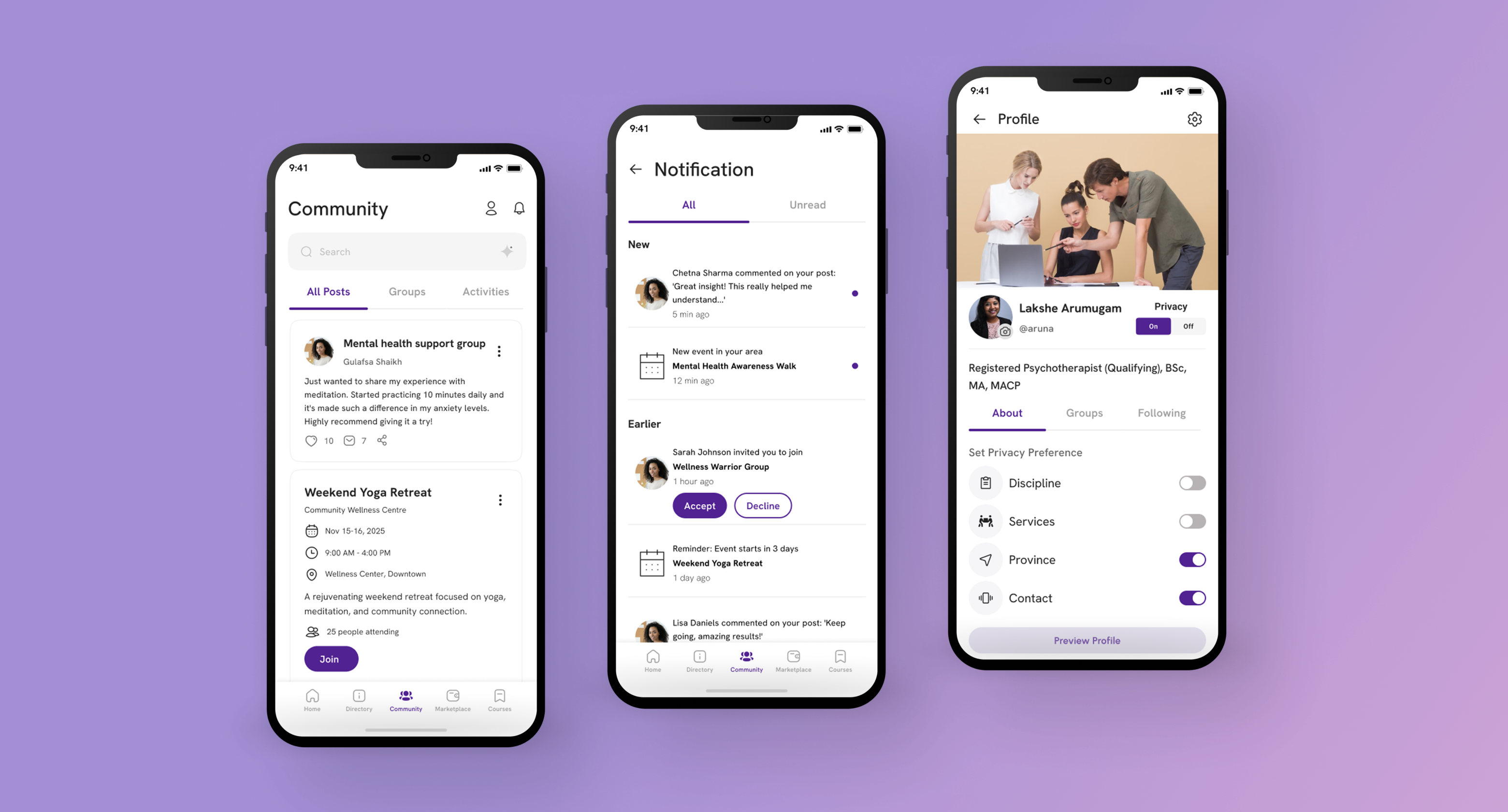
FemEntity is an AI-powered wellness platform connecting users with licensed practitioners. The goal of this project was to design and prototype a Community Forum feature to serve as a central hub for peer support, resource sharing, and practitioner engagement within a trusted, wellness-focused ecosystem.
As the Lead Product Designer, I led a 12-week project building Community Forum. My job was to guide a group of UX/UI students through the professional design process. We started with basic competitor research and finished with high-quality designs that were ready for developers to build.
Key insight
Our thematic analysis of 20 client and practitioner calls overturned the obvious approach: users didn't want a fully open peer-to-peer forum. They valued practitioner-led content and controlled anonymity far more. This single finding reshaped the information architecture — categories are organized around practitioner-led spaces, with per-post anonymity controls, rather than open discussion boards.
Impact
- Delivered a fully prototyped Community Forum with 25+ screens
- Established clear user flows and IA ready for developer handoff
- Mentored 5 students through a real-world UX process, from research to high-fidelity design
- Strengthened FemEntity's design system with new forum-specific components and patterns
I was responsible for
- Planning and structuring the 12-week internship project using Notion, Miro and Whimsical
- Arranging weekly check-ins via Zoom and Slack, and providing detailed feedback
- Drove alignment with the product team on MVP feature priorities
- Facilitating workshops (e.g., MindMapping, user flow sessions)
- Providing weekly feedback and guidance to students
- Ensuring alignment with product vision and design system
- Collaborating closely with another UX designer to prepare materials, resources, and reviews
Preparation
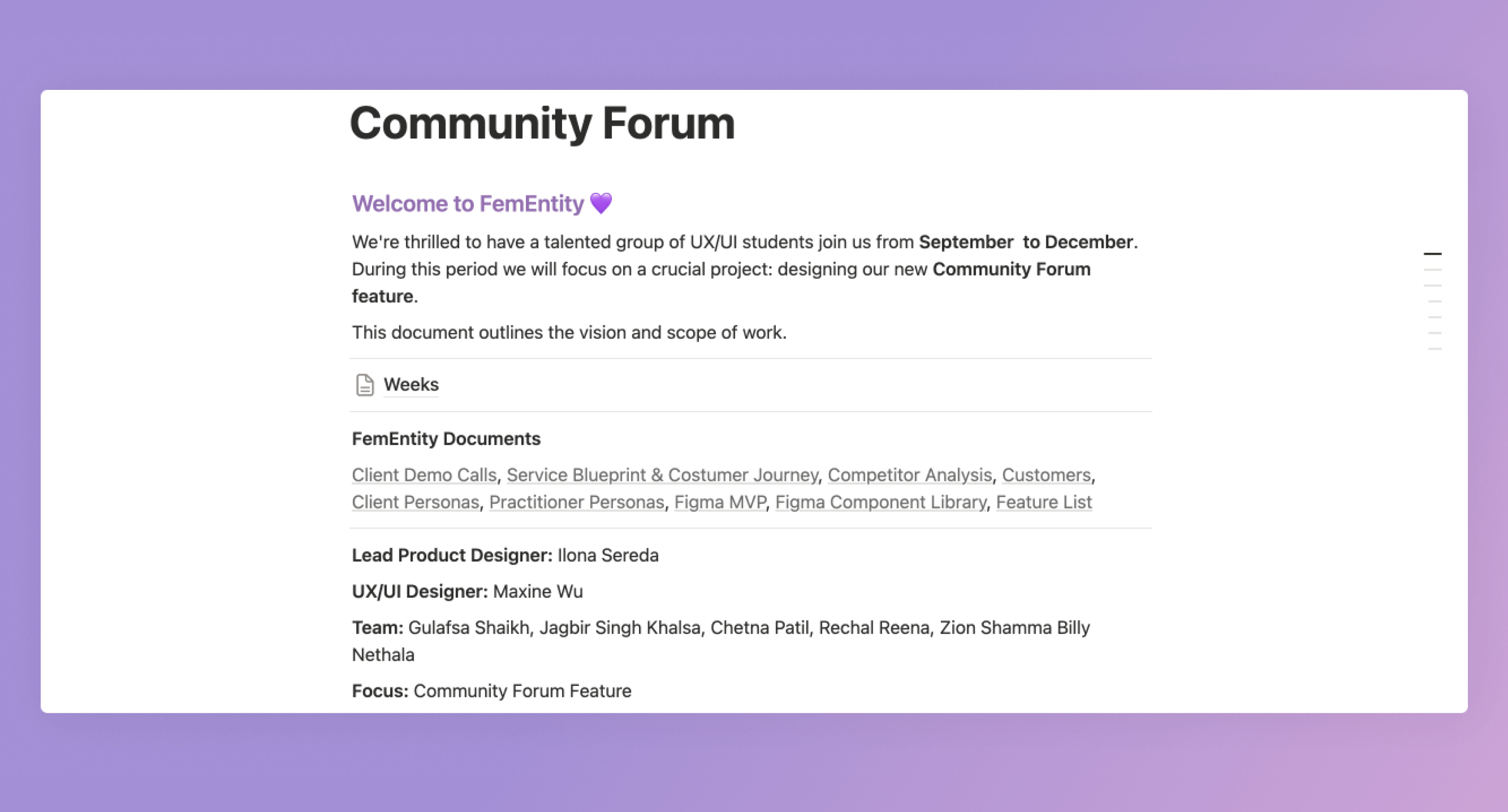
Before student onboarding, I gathered all relevant documentation and existing research working closely with UX/UI designer, aligned with the CEO on the vision and priorities for the Community Forum, and created a dedicated Notion page to help students understand the product vision and the plan for the next three months.
Phase 1: Research & Discovery (Weeks 1–2)
Before student onboarding, the UX/UI designer and I gathered all relevant documentation and existing research, aligned with the CEO on the vision and priorities for the Community Forum, and I created a dedicated Notion page to help students understand the product vision and the plan for the next three months.
We began with thorough research to understand user needs, behaviors, and the competitive landscape. I guided the team through:
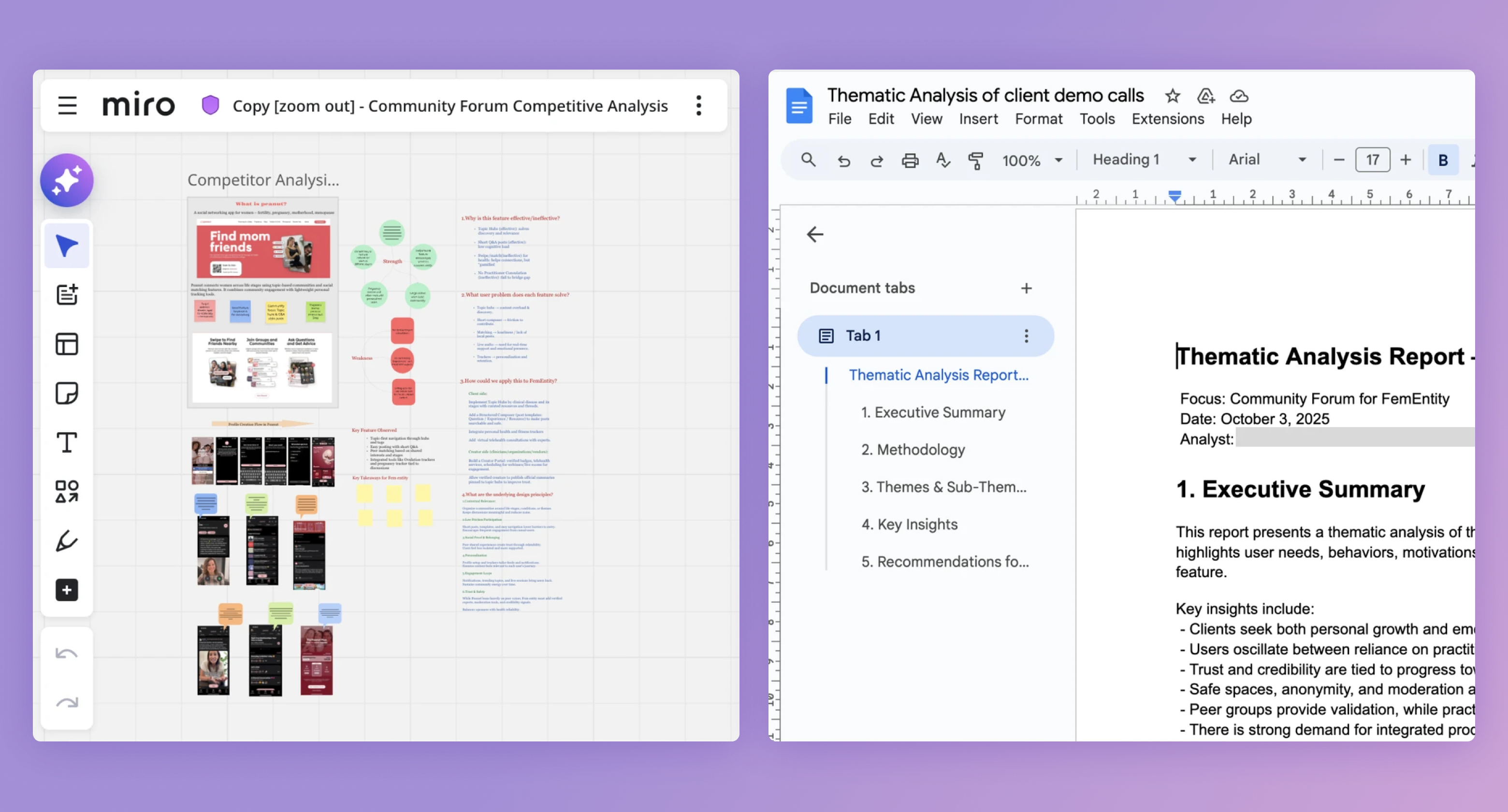
- Competitive Analysis of 5 healthcare and community platforms
- Thematic Analysis of 20 client and practitioner demo calls to uncover trust, privacy, and engagement patterns
This research revealed that users valued practitioner-led content and controlled anonymity more than fully open peer-to-peer forums.
Phase 2: Information Architecture (Weeks 3–6)
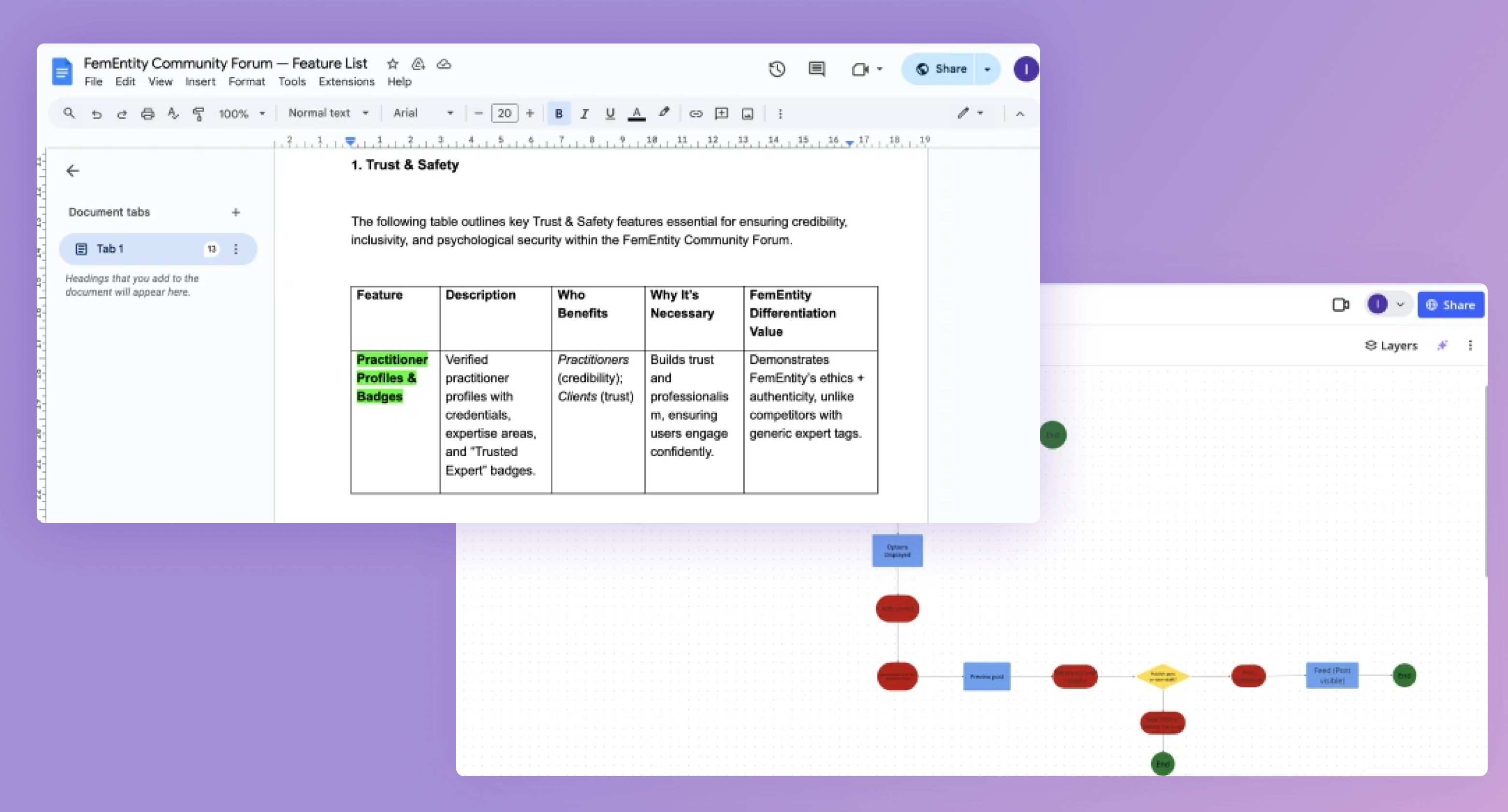
To translate research insights into a functional structure, I employed several key methodologies. First, working with UX/UI designer, I created draft feature list with hypotheses based on MVP goals. I then presented it to the students and they worked on feature list ideation based on their research. We also included our CEO and Marketing Manager into the discussion.
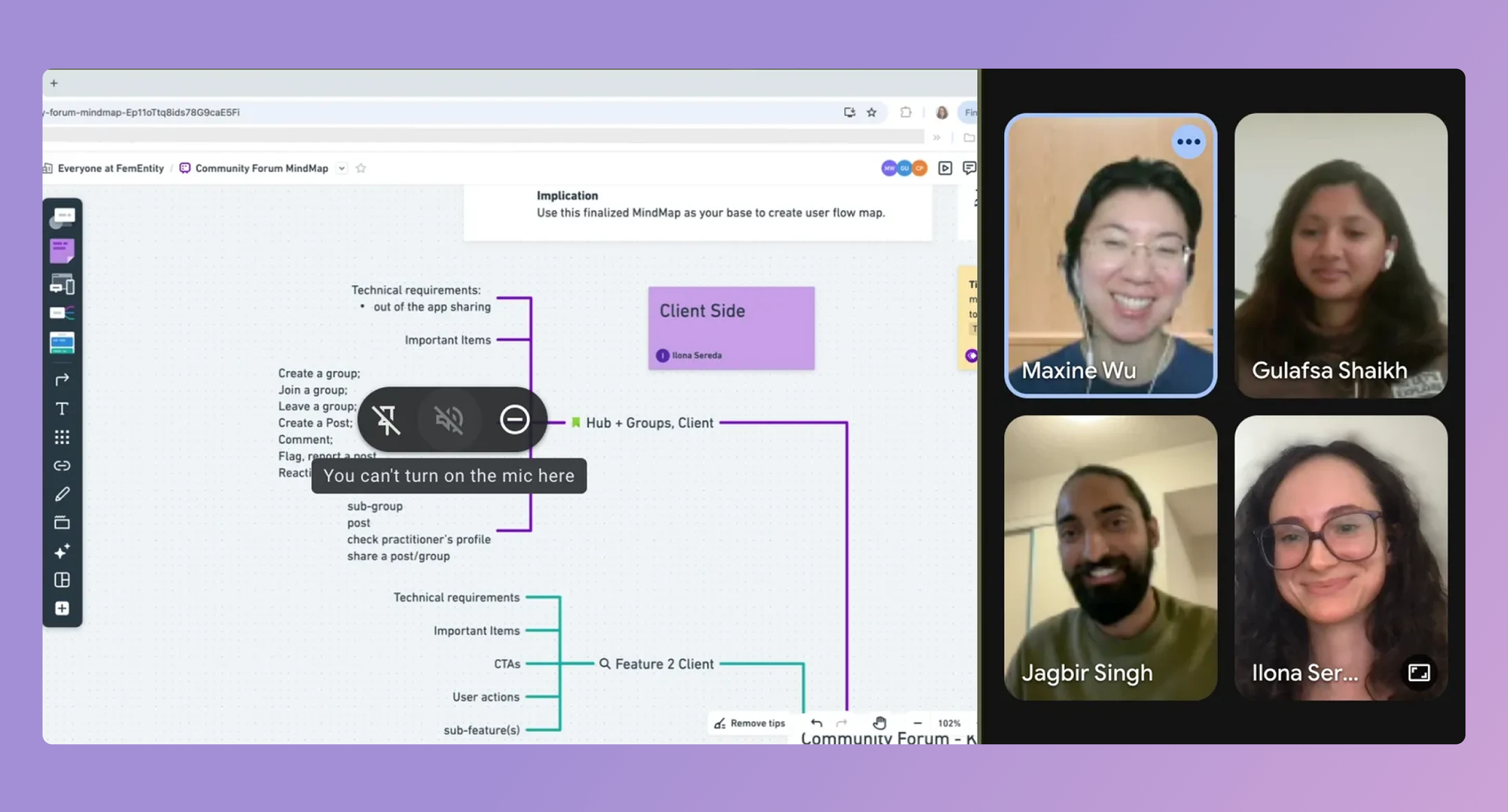
MindMap Workshop
To add more interaction, encourage collaboration and to ideate better, I suggested running a MindMapping workshop with students where we've discussed in detail Community Forum categories and structure, ensuring the architecture reflected the research findings. Based on our MindMapping session result, we mapped primary User Flows.
Phase 3: Prototyping & Iteration (Weeks 7–12)
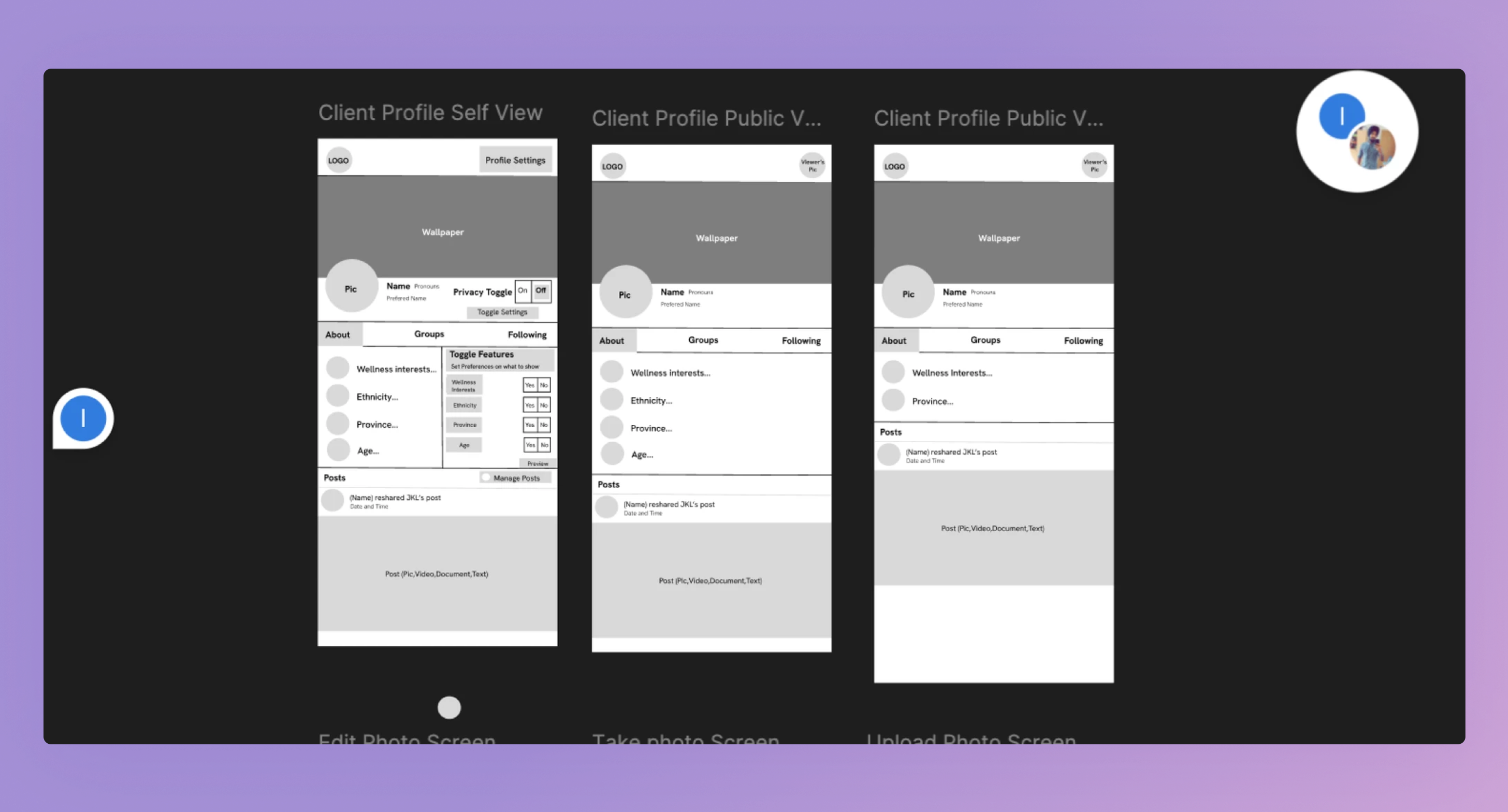
We translated the architecture into tangible designs through iterative prototyping, using the FemEntity design system and reusing existing design patterns. Each week we had discussions and reviews, focusing on interaction design, visual hierarchy, and usability. This phase included creation of Mid-Fidelity and High-Fidelity Wireframes.
Summary
This project was not only about designing a feature, it was an exercise in adaptive mentorship and clear communication. Working with students at different skill levels taught me to adjust my guidance in real-time. While I maintained non-negotiable quality standards, I became more flexible with process execution. This experience fundamentally improved my ability to lead diverse teams, articulate design rationale, and create a place that helps others succeed.