Project Overview
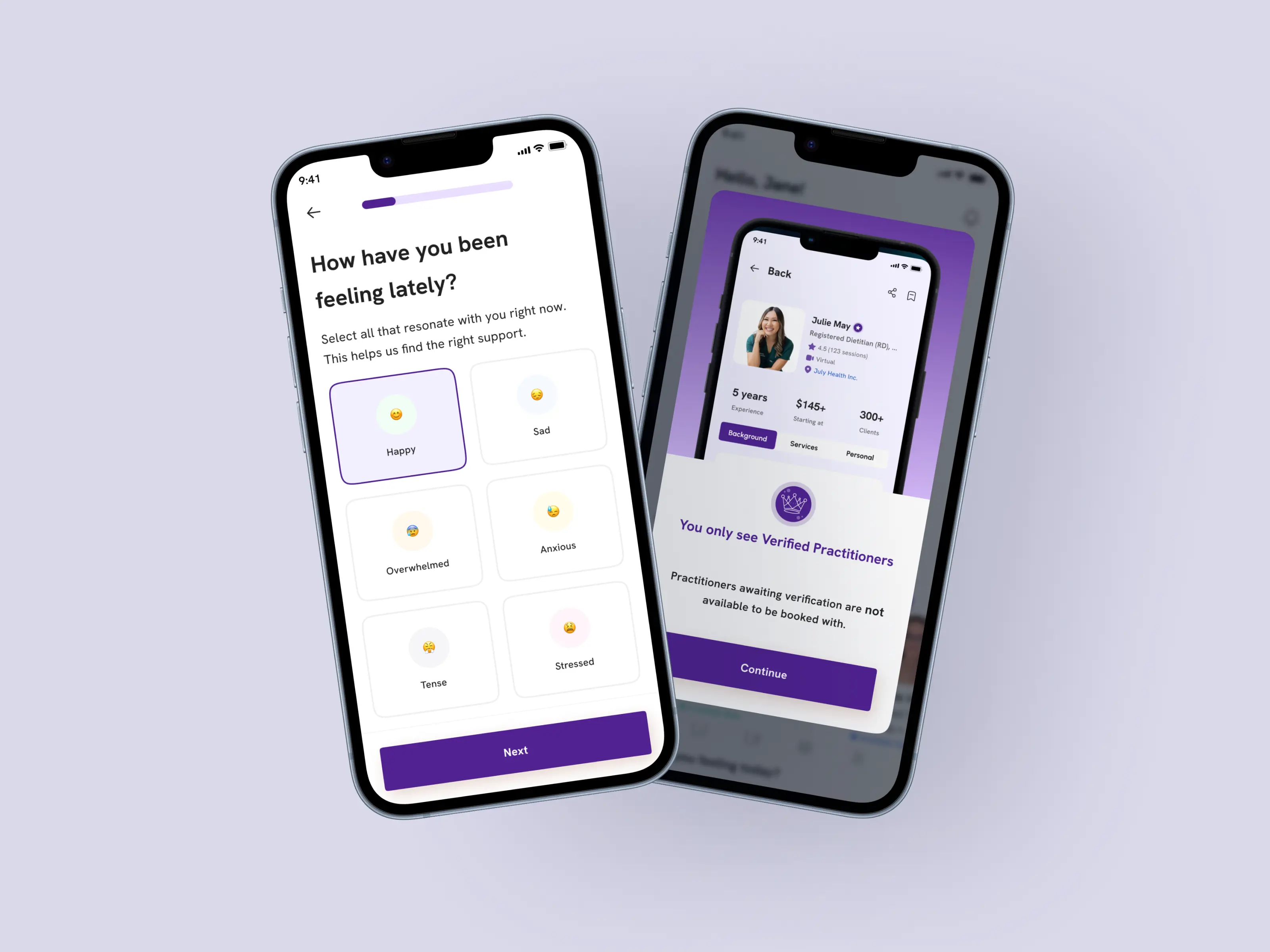
FemEntity is an AI-powered wellness platform connecting users with licensed practitioners. The goal of this project was to design and prototype a Community Forum feature to serve as a central hub for peer support, resource sharing, and practitioner engagement within a trusted, wellness-focused ecosystem.
As the Lead Product Designer, I led a 12-week project building Community Forum. My job was to guide a group of UX/UI students through the professional design process. We started with basic competitor research and finished with high-quality designs that were ready for developers to build.
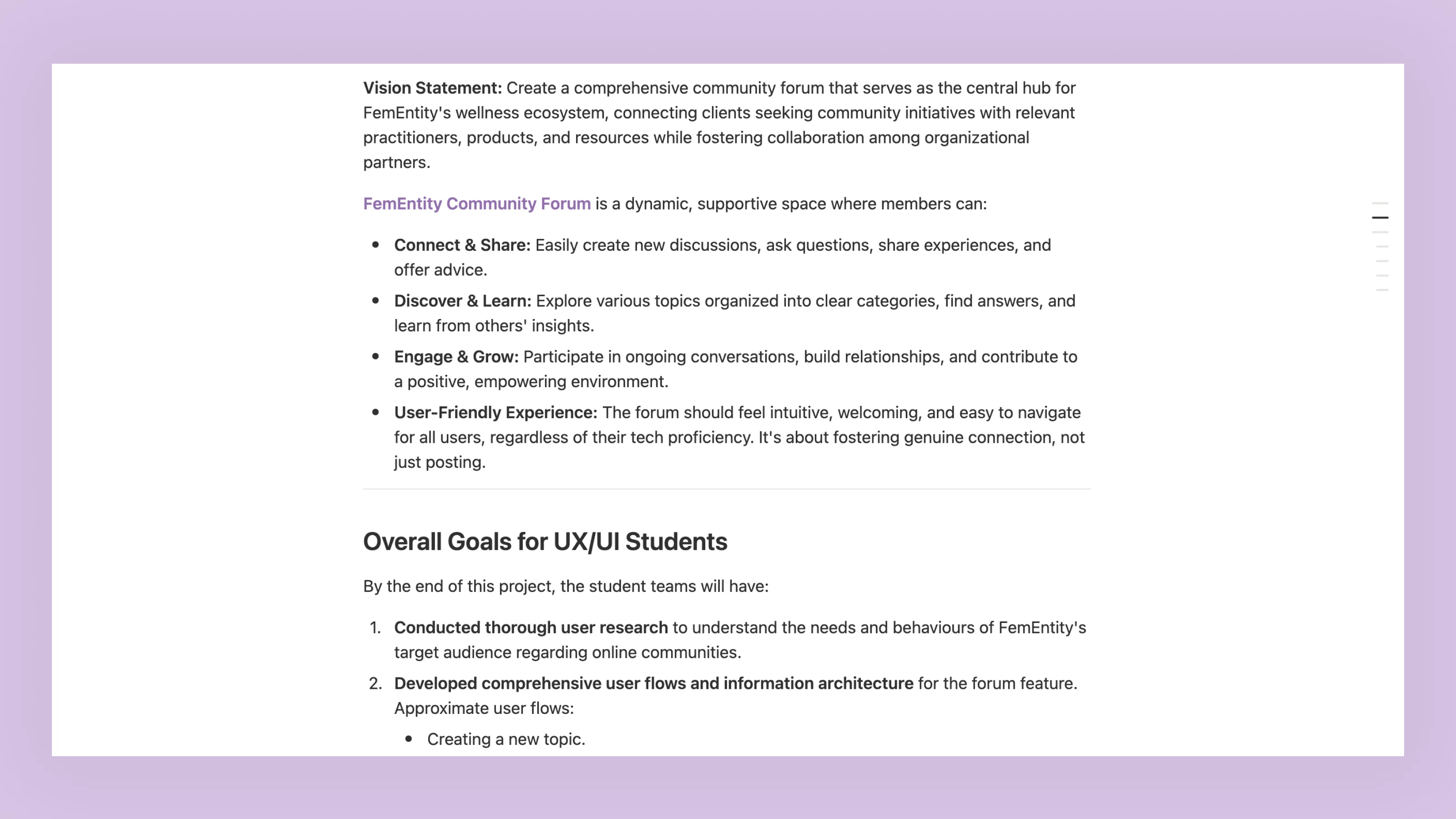
The dedicated Notion page, giving students a clear view of the product vision and the three-month plan.
Key insight
Our thematic analysis of 20 client and practitioner calls revealed that users didn't want a fully open peer-to-peer forum — they valued practitioner-led content and controlled anonymity more.
Preparation
Before student onboarding, I gathered all relevant documentation and existing research, working closely with the UX/UI designer, aligned with the CEO on the vision and priorities for the Community Forum, and created a dedicated Notion page to help students understand the product vision and the plan for the next three months.
Phase 1: Research & Discovery (Weeks 1–2)
We began with thorough research to understand user needs, behaviors, and the competitive landscape. I guided the team through:
- Competitive analysis of 5 healthcare and community platforms
- Thematic analysis of 20 client and practitioner demo calls to uncover trust, privacy, and engagement patterns
This research revealed that users valued practitioner-led content and controlled anonymity more than fully open peer-to-peer forums.
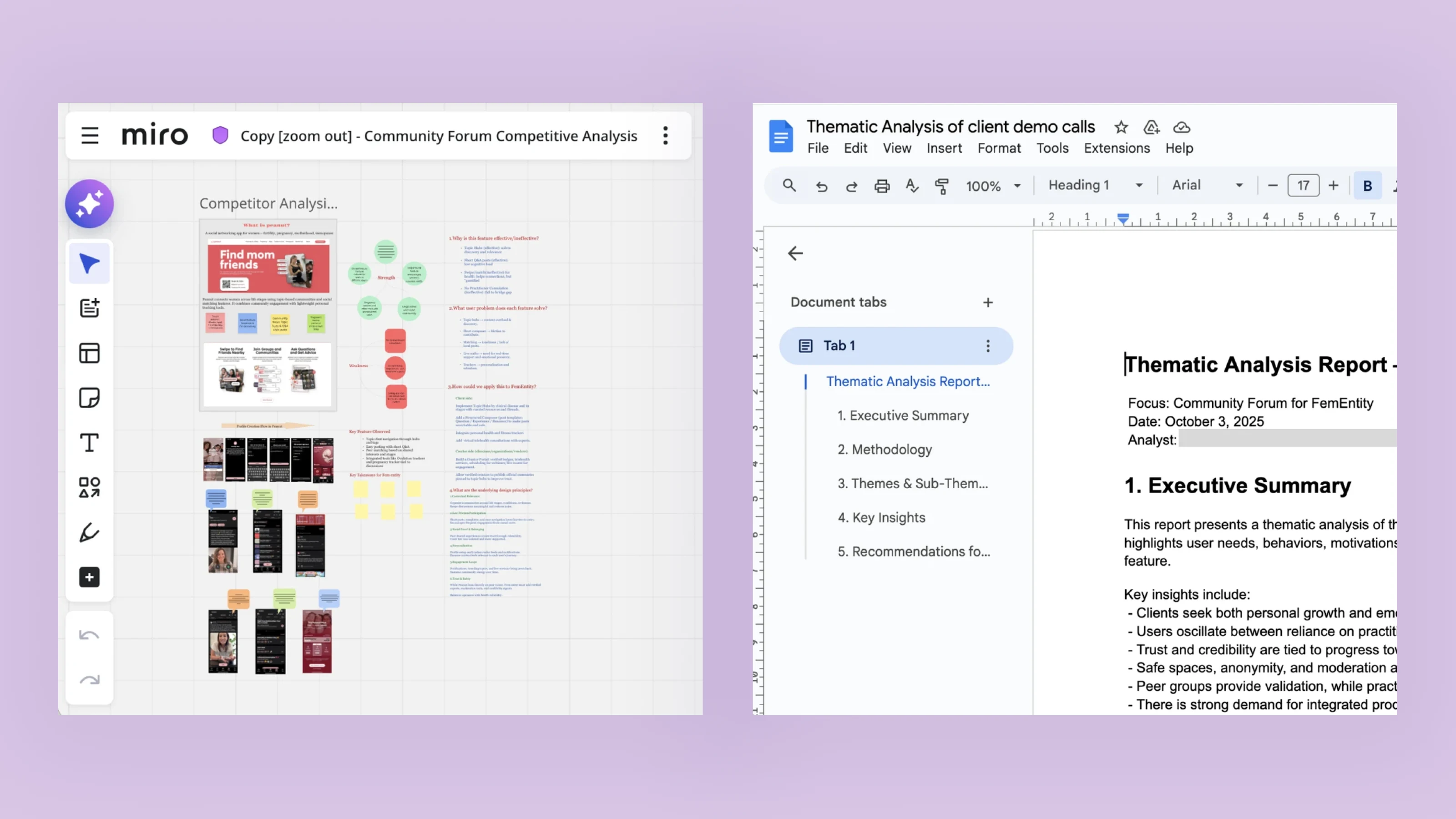
Research phase: the Miro board and thematic analysis report that surfaced trust, privacy, and engagement patterns.
Phase 2: Information Architecture (Weeks 3–6)
To translate research insights into a functional structure, I employed several key methodologies. First, working with the UX/UI designer, I created a draft feature list with hypotheses based on MVP goals. I then presented it to the students and they worked on feature list ideation based on their research. We also included our CEO and Marketing Manager in the discussion.
MindMap Workshop
To add more interaction, encourage collaboration and to ideate better, I suggested running a MindMapping workshop with students where we discussed in detail Community Forum categories and structure, ensuring the architecture reflected the research findings. Based on our MindMapping session results, we mapped primary user flows.
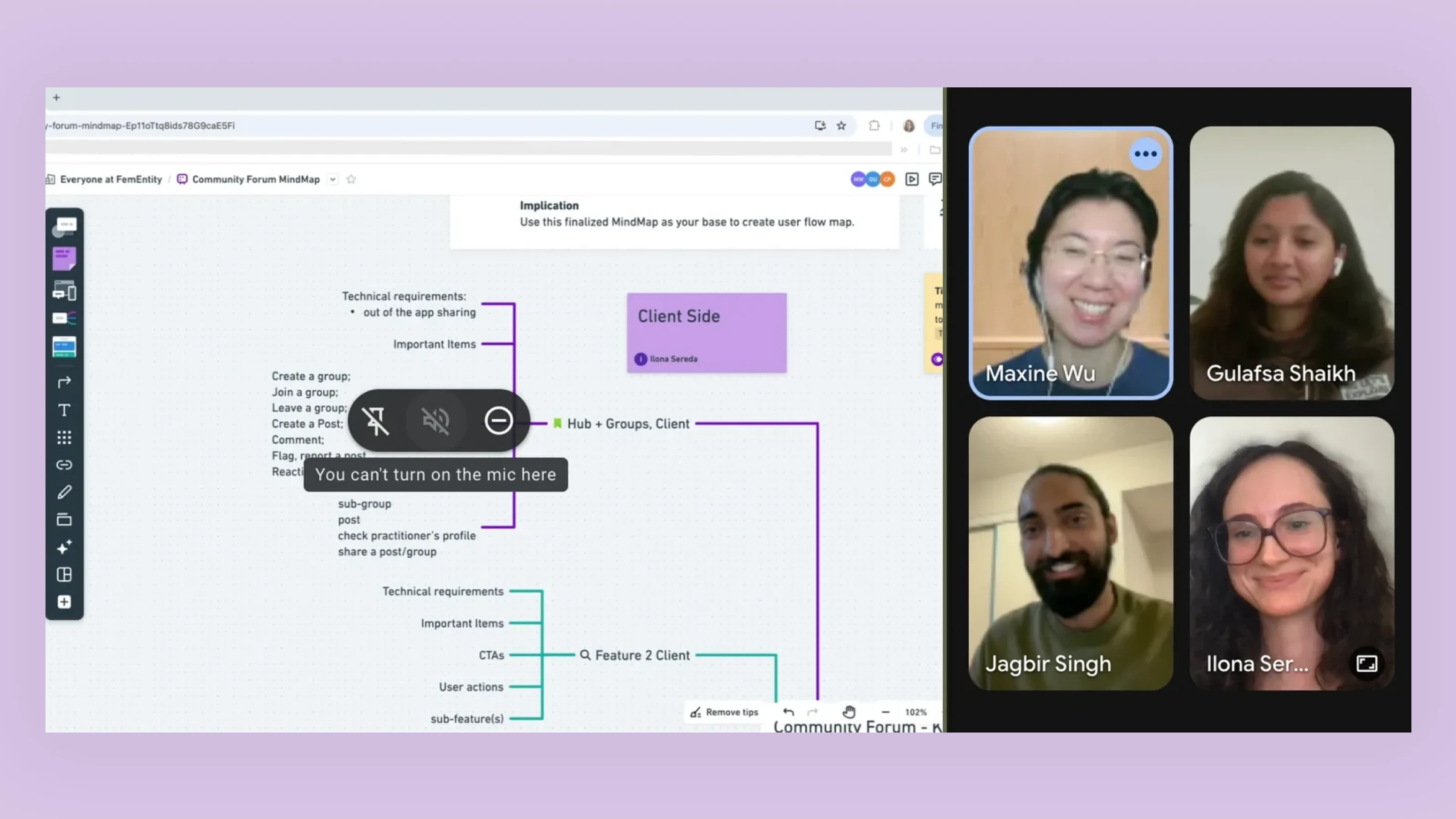
The MindMapping workshop: mapping Community Forum categories and structure as a team.
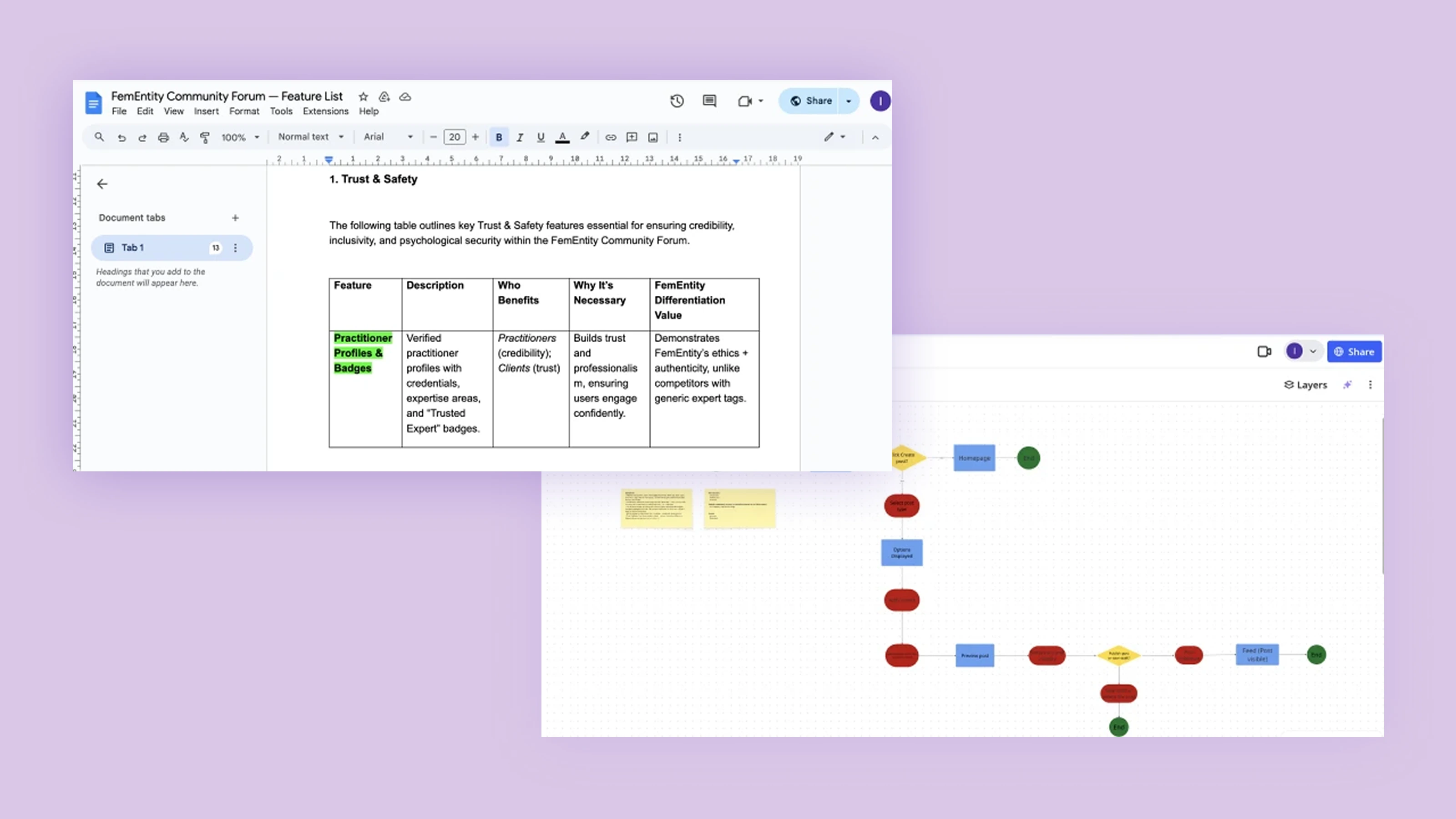
The feature list and IA structure, shaped together with the CEO and Marketing Manager.
Phase 3: Prototyping & Iteration (Weeks 7–12)
We translated the architecture into tangible designs through iterative prototyping, using the FemEntity design system and reusing existing design patterns. Each week we had discussions and reviews, focusing on interaction design, visual hierarchy, and usability. This phase included creation of mid-fidelity and high-fidelity wireframes.
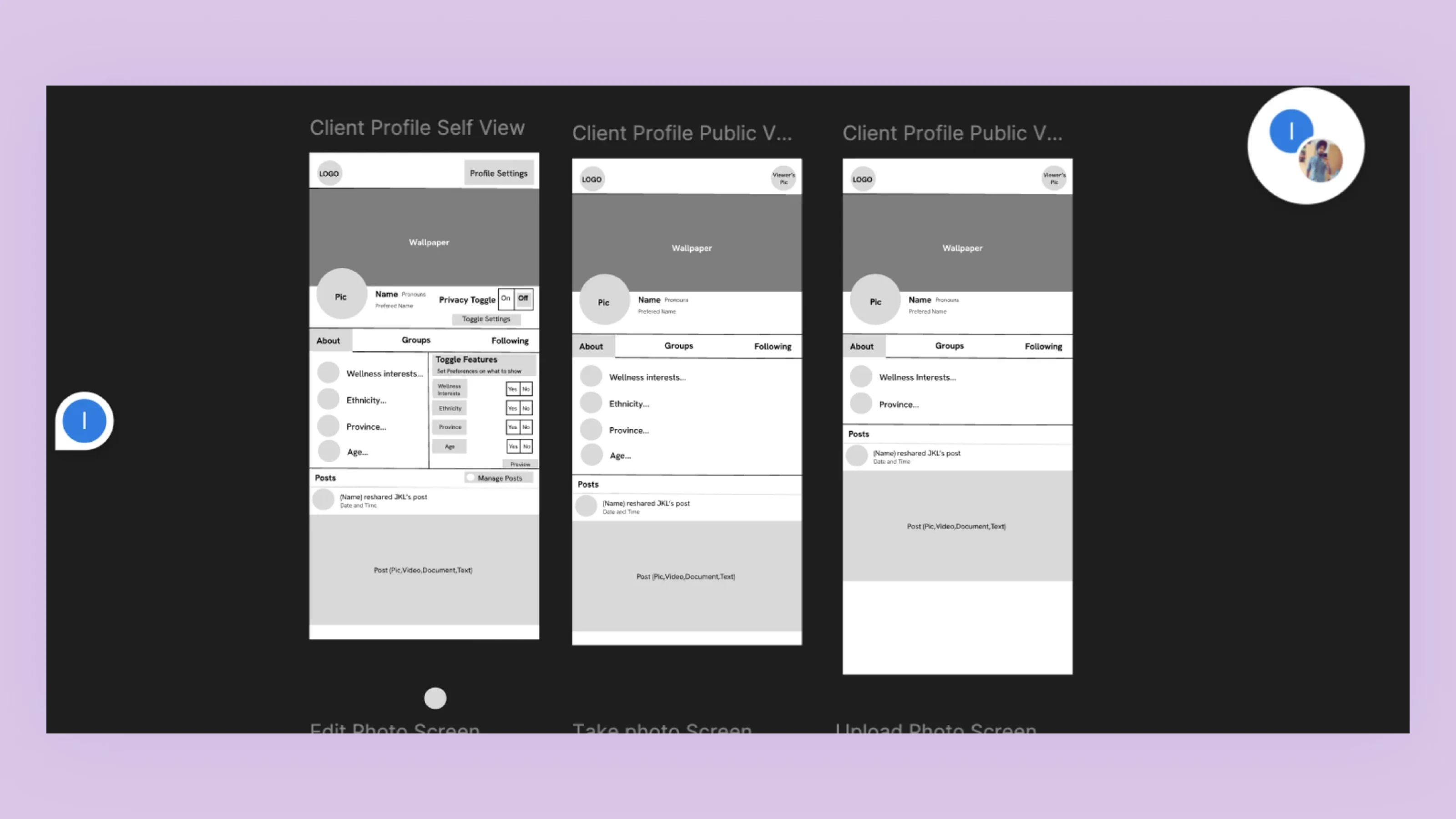
Mid-fidelity and high-fidelity wireframes, refined through weekly reviews.
Measurement plan
The Community Forum is scheduled for release after the MVP launch. To evaluate whether it achieves its goals — a safe, practitioner-led space with controlled anonymity — we defined four metrics for post-launch tracking.
Engagement
- Participation rate: to understand the percentage of new members who post, comment, or react within their first week.
- Anonymity usage rate: to know the percentage of posts using the anonymity toggle, to validate the research insight about controlled anonymity.
Safety & trust
- Trust & psychological safety: members' self-reported sense of safety when participating, on a scale from 1 to 5.
Summary
This project was not only about designing a feature — it was an exercise in adaptive mentorship and clear communication. Working with students at different skill levels taught me to adjust my guidance in real-time. While I maintained non-negotiable quality standards, I became more flexible with process execution. This experience fundamentally improved my ability to lead diverse teams, articulate design rationale, and create a place that helps others succeed.